

TFL Market Conditions Report: Q4 2026
The Quarter in Play: Q4 2026
THE READ IN 60 SECONDS
The last few months ran on two tracks. A once-in-a-generation event drove enormous spending through mid-July while core concert demand temporarily cooled underneath it. With the World Cup over now, the underlying market is visible again. If mid-year numbers looked unusually strong and have since dropped, that’s likely the tournament ending rather than a shift in true baseline demand. From September onward, the year-over-year comparison is no longer affected by World Cup activity, so normal buying patterns should be easier to read.
Looking ahead, concerts continue to reward early planning, and the earliest buyers spend the most per ticket. Sports dominate this quarter's mix, with all four major leagues being live at once in late October and nearly half of sports orders placed in the final 10 days. Holiday and theater demand create a concentrated opportunity in November and December. Together, these purchase windows show how differently Q4 demand develops across categories.
CATEGORY MOMENTUM
Concerts: buyers book earlier, and the early buyer spends more
Concert volume has run above its own trailing baseline in every complete month but one this year. What matters most for planning is not how much consumers buy, but when.
The median concert purchase lands 46 days before the event and under a quarter of concert orders are placed within the final 10 days before the event. Orders in the lowest price tier sell at a median of 29 days out, and the highest price tier at 74 days. Stadium-scale headliners draw their volume early (Usher & Chris Brown, Bruno Mars, and BTS led our 2026 trending list).
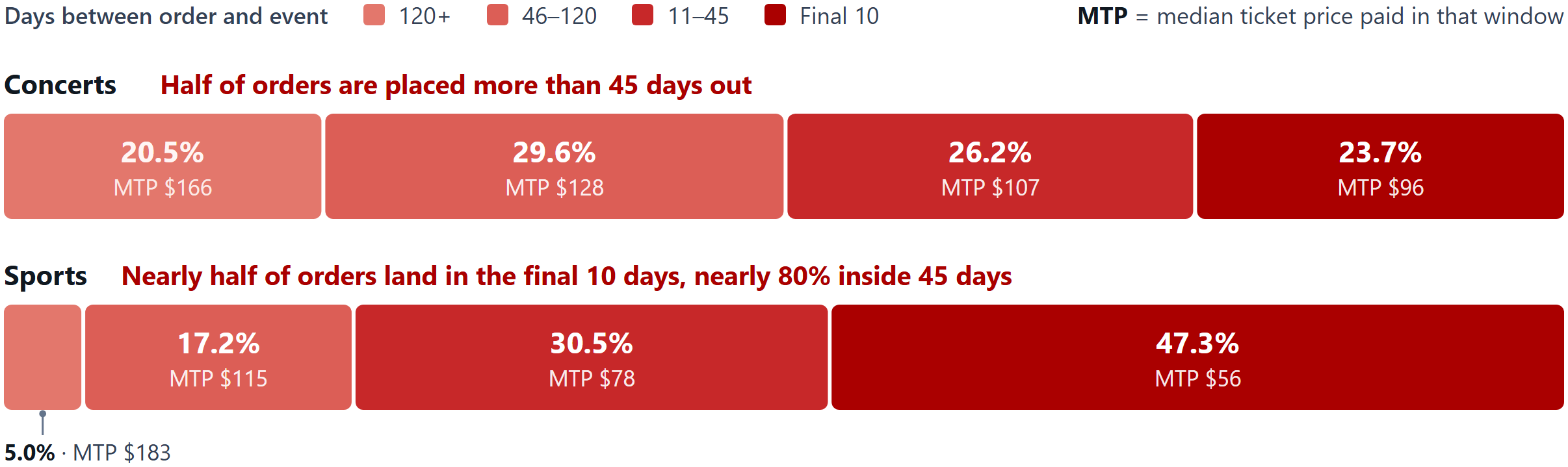
Concert orders placed more than 120 days out carry a median ticket price (MTP) of $166, compared to $96 inside the final 10 days. The early buyer is planning an outing and choosing specific seats, while later buyers make decisions closer to the event.
Concert order demand is running above its own normal
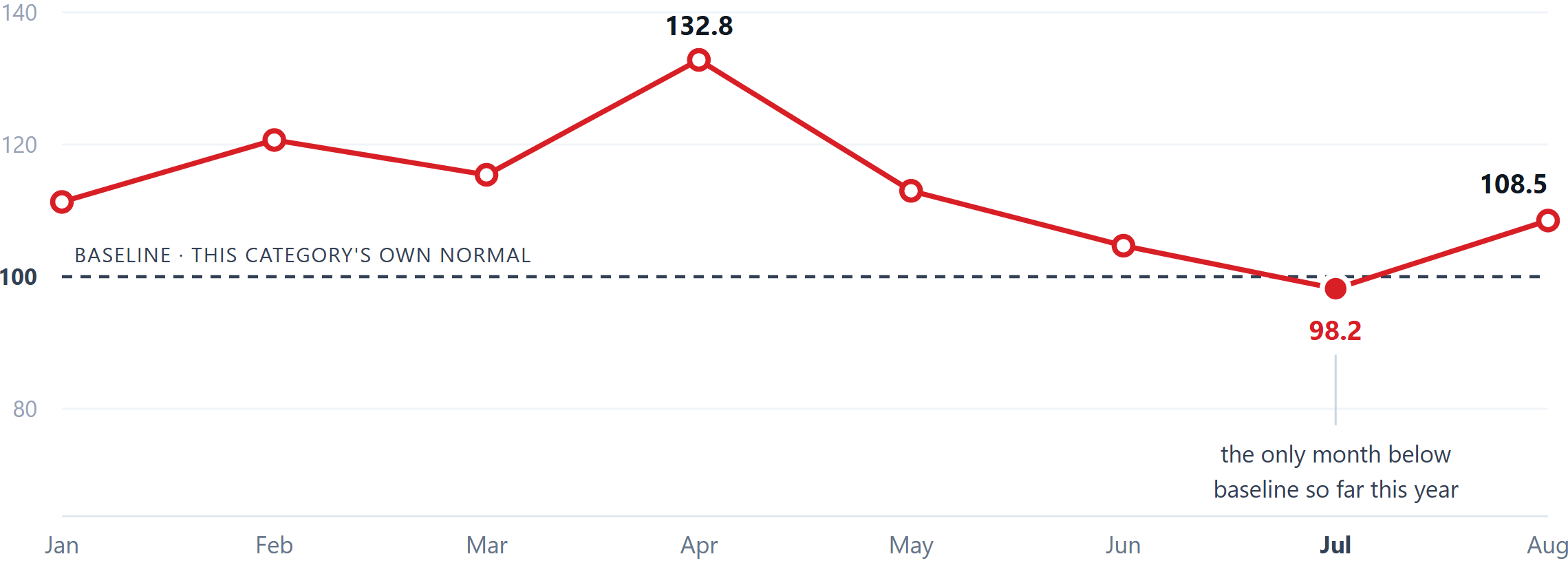
What to watch: late starting 2026 tours and new announcements for 2027. The biggest shows for next year's prime concert season tend to get announced between November and January.
Sports: the buyer decides late, and all four major leagues are in play
Sports account for the biggest slice of the quarter, representing just over half of all orders for fourth-quarter events. Sports follow the opposite clock from concerts, with nearly half of its orders placed in the final 10 days.
The reason is structural. A concert's selling window opens early and stays open for months. Sports goes on sale when the schedule drops, then most of the buying waits until the event date is nearer. Two things drive this trend. The regular season is about 98% of sports volume, and it sells late because there's so much inventory. A fan choosing a game that week has dozens of substitutes, so nothing forces the decision early. The postseason is the opposite. The games may have set dates, but matchups don't exist until teams qualify, so the market compresses into hours and days. Close to 90% of postseason orders land inside the final 10 days, compared to roughly half for the regular season. Both are easy to plan for, just in different ways.
Share of orders by purchase lead time
For up to two weeks in late October, all four leagues are live at once
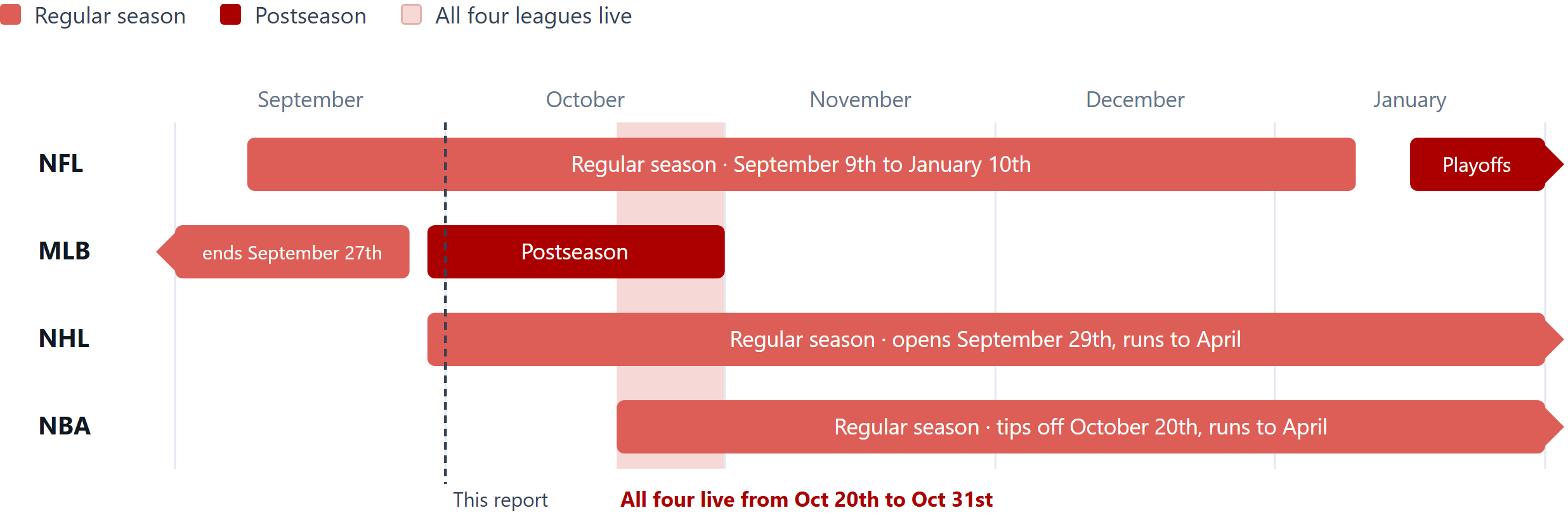
Dates to build around:
- MLB: The postseason is underway, and the Rays, Guardians, Brewers, and Dodgers have byes into the Division Series starting October 3rd. The World Series starts October 23rd with its matchup still to be decided.
- NFL: A five-game Thanksgiving week, November 25th to 27th, plus a Christmas Day tripleheader. Thanksgiving Day has Bears at Lions, Eagles at Cowboys, and Chiefs at Bills. Christmas Day has Packers at Bears, Bills at Broncos, and Rams at Seahawks.
- NBA: Five Christmas Day games: Spurs at Knicks (a 2026 Finals rematch), Heat at Celtics, 76ers at Lakers (LeBron James's first game back in Los Angeles), Thunder at Timberwolves, and Nuggets at Warriors.
Theater: the buyer shops for the holidays, and the shows peak in December
Theater is a far smaller slice of the quarter than sports, but it has the most seasonal demand pattern. With holiday shows included, close to half of its orders are for fourth-quarter events. December alone carries more than one in four of the year's theater orders, with holiday shows being the largest driver of that spike. The Nutcracker, the Radio City Christmas Spectacular, Trans-Siberian Orchestra, A Christmas Carol, Elf the Musical, and other holiday shows make up 61% of December's total theater orders. Most of those tickets are bought within the holiday quarter itself, not months ahead.
Holiday-show demand lines up closely with the broader holiday shopping window. By November, consumers are already shopping for gifts and planning family outings, which helps explain why demand concentrates so heavily in November and December.
Holiday shows are what make the end of the year shine
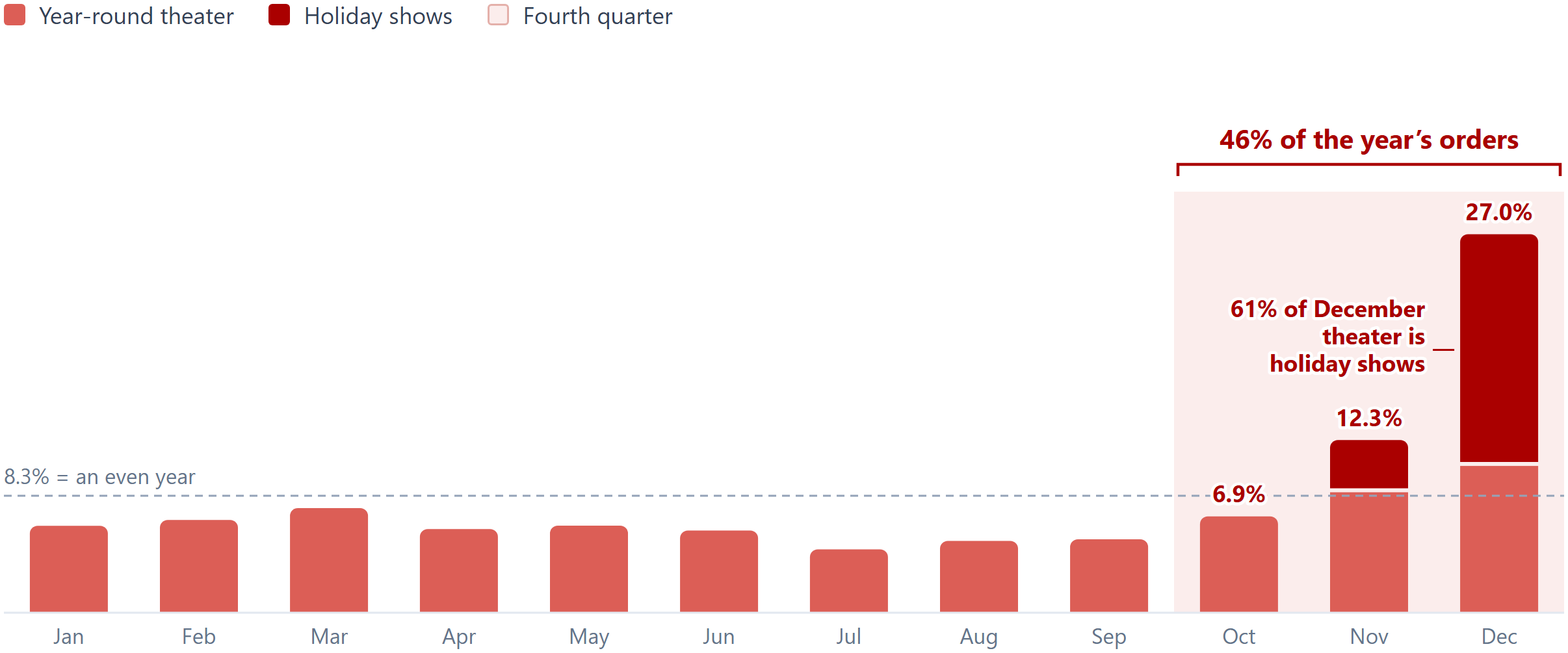
Four out of five holiday-show orders are placed in November and December

SPOTLIGHT: THE VENUE IS THE NEW HEADLINER
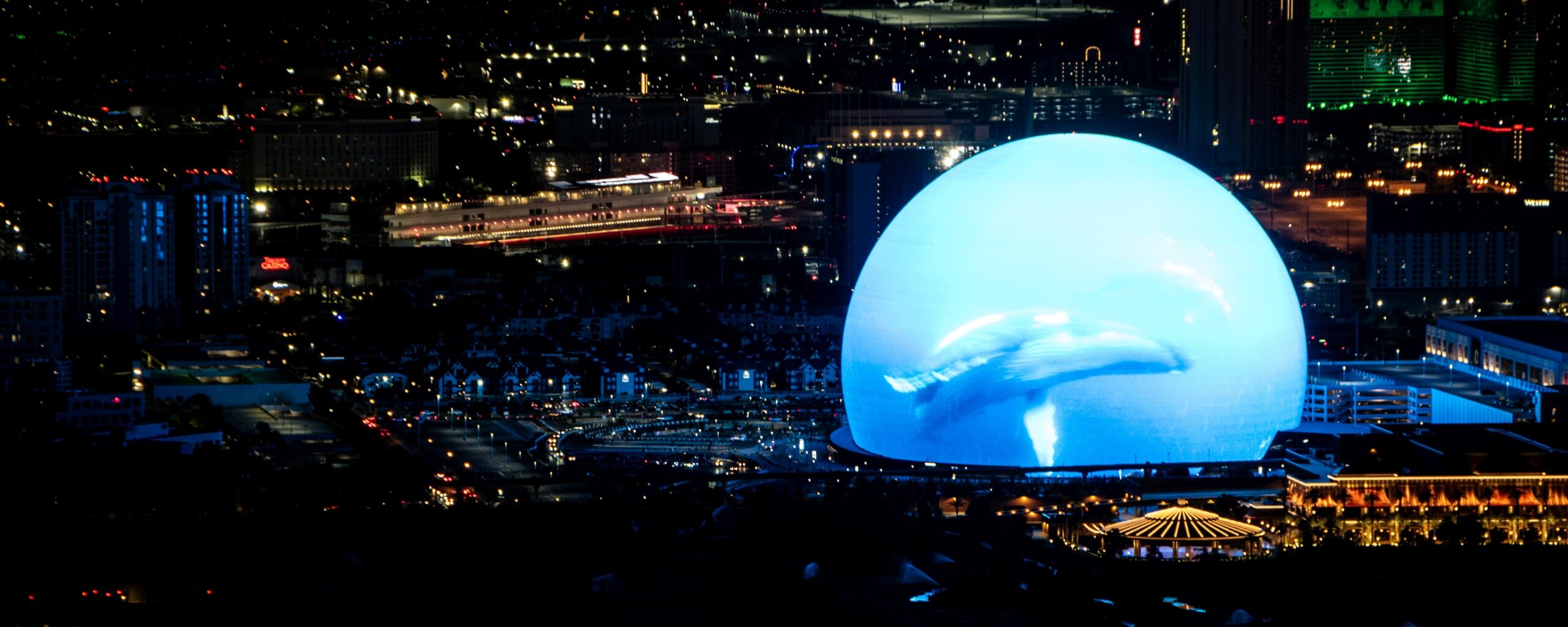
The most interesting demand pattern of the past few months isn’t an artist. It's a building. Las Vegas's Sphere runs a rotating concert residency on top of an always-on resident production (The Wizard of Oz). So far this year we've sold into 130 separate concert dates at that one address, and the slate ahead runs well into 2027. The residency model keeps three purchase windows open at once: now, next, and later. Now is whatever show is happening this week, next is the headliner a month or two out, and later is the marquee date further ahead. The audience treats it as a destination rather than a local night out. For many buyers, the concert is the reason for the trip, and the flight and hotel get booked around the event date. That's why these orders carry higher order values and are purchased earlier than the typical concert.
This format is spreading, just not quickly. A second Sphere is under construction on Yas Island in Abu Dhabi, and a third, smaller one is planned for National Harbor outside Washington, DC. Neither opens before 2029, leaving Las Vegas as the only Sphere market for the next few years.
This quarter at Sphere: a headliner in every window